

In a world that often feels overwhelmed by environmental challenges, a fascinating discovery shines a light on nature’s ingenuity. Join us as we explore the remarkable abilities of fig trees that not only bear fruit but also contribute to a healthier planet in astonishing ways.
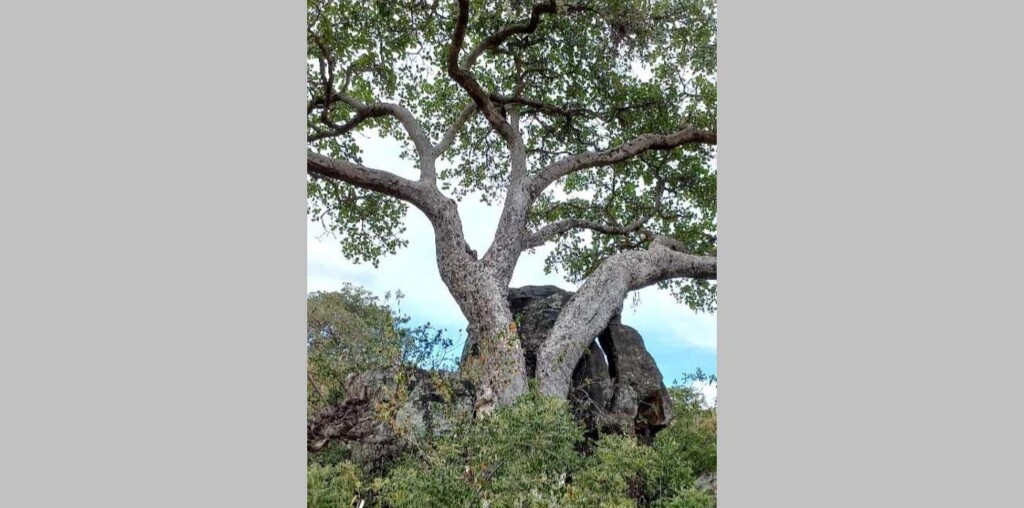
Imagine walking through a vibrant forest in Kenya, where certain fig trees stand tall, not just offering shade and nutrition, but also working tirelessly to clean the air. Recent studies have uncovered that the truly remarkable Ficus wakefieldii and its relatives have a distinctive superpower: they can transform carbon dioxide from the atmosphere into solid rocks of calcium carbonate.
This unique process, dubbed ‘auto-petrification,’ showcases how these trees can contribute to the battle against climate change. While all trees engage in photosynthesis to transform carbon dioxide into organic matter, these fig trees have taken it a step further. They create calcium oxalate crystals which, after decomposition, convert into calcium carbonate—essentially stone. This not only improves soil quality but also helps in storing carbon more effectively than traditional organic carbon.
Dr. Mike Rowley, a dedicated researcher from the University of Zurich, along with his team, have discovered that the Ficus species are among the first fruiting trees identified with this capability. Picture thick, lush canopies that not only produce delicious figs but are also heroes in sequestering carbon deep in the earth—how inspiring!
As these trees age and decay, the cycle continues, with specialized bacteria and fungi working to turn those crystals into long-lasting calcium carbonate, enriching the surrounding soil and making the ecosystem healthier for all living beings. Dr. Rowley’s team has noted that the soil becomes more alkaline, thereby enhancing nutrient availability—now isn’t that a win-win for tree lovers and farmers alike?
The next steps entail exploring the full potential of F. wakefieldii in agroforestry, with scientists examining its water needs and fruit production to find its ideal role in sustainable agriculture. This research opens the door to a future where planting trees could not only mean food security but also a vital strategy to combat climate change.
Looking ahead, Dr. Rowley and his colleagues envision a world where many more trees with similar capabilities are discovered. The possibilities are endless! As we cultivate forests, we have the chance to choose species that hold incredible potential for carbon sequestration alongside their bounty of fruits.
So, the next time you bite into a juicy fig or take a walk under a fig tree, remember that you’re not just appreciating nature’s beauty; you’re witnessing a part of a larger solution to a global challenge. Let’s share the marvel of these incredible trees with our eco-conscious friends and celebrate the remarkable resilience of nature!
If you would like to see similar good news stories click here & Share this to brighten someone’s day.