

Imagine embarking on an incredible journey across vast oceans, guided only by the stars and your instincts. This is the story of a dedicated team of scientists who set out to unlock the secrets of ancient maritime navigation using nothing but a canoe replicated from 30,000 years ago. Their journey is a remarkable blend of historical insight and modern-day adventure.
A group of adventurous researchers recently took to the East China Sea, sailing several hundred miles in a specially crafted canoe based on ancient designs. Their mission? To explore a captivating question that has puzzled anthropologists for ages: how did early humans make the trek from Taiwan to Japan’s Yonaguni Island?
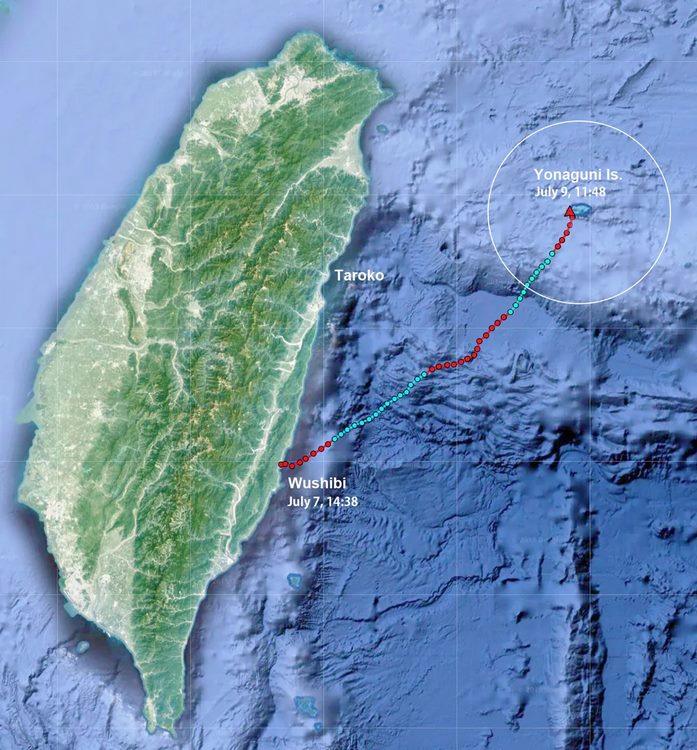
The team faced an impressive challenge, crossing about 140 miles over waters driven by one of the world’s strongest currents, the Kuroshio. While this distance might seem modest compared to some other historical voyages, it posed significant difficulties, especially under those turbulent waters.
Led by Professor Yousuke Kaifu from the University of Tokyo, the scientists conducted simulations and utilized authentic tools of the time to replicate a prehistoric canoe. Their efforts resulted in the construction of a 23-foot dugout canoe, lovingly named Sugime, crafted from a single Japanese cedar trunk using models of ancient stone tools.
Setting sail in 2019, the crew paddled tirelessly for over 45 hours without sighting their destination. With only the sun, stars, ocean currents, and their experience to guide them, they demonstrated the navigation skills that our ancestors must have used in their explorations.

Six years post-expedition, Professor Kaifu reflects on the revelations uncovered during their journey. The understanding that dugout canoes were both fast and durable changed their perception of ancient seafaring. Early explorers were skilled navigators, relying on their intuition and intricate knowledge of the ocean’s signs.
“Like the ancient Polynesians who had no maps but traversed the vast Pacific, they had their methods. We learned to recognize natural indicators, much as they did,” Kaifu explained, emphasizing the resourcefulness of early mariners.
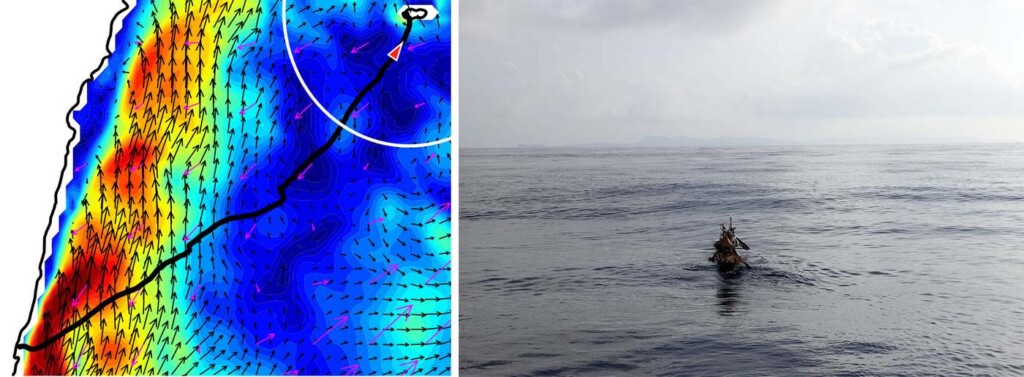
The team’s journey highlighted the immense challenges our ancestors must have faced in crossing such treacherous waters. Their findings not only shine a light on ancient maritime skills but also reveal the indomitable spirit of early explorers. Each stroke of the paddle propelled them into the unknown, navigating a sea full of mystery and wonder.
This inspiring work reminds us that the spirit of exploration lives on, and that our history continues to guide and shape our path toward understanding the past. So, here’s to those courageous explorations that connect us all, through time and across the waves.
If you would like to see similar good news stories click here & Share this to brighten someone’s day.