
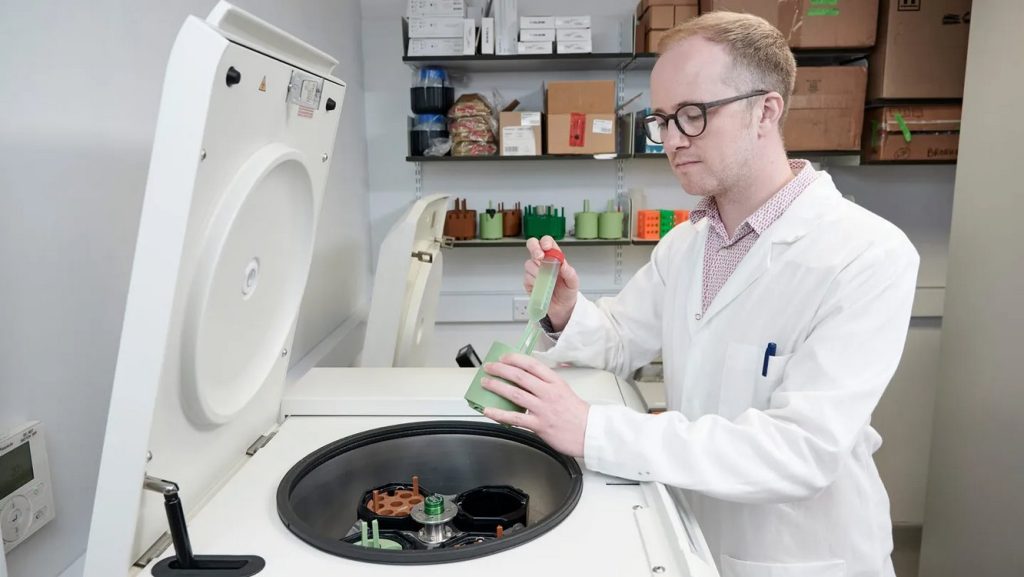
In a remarkable blend of science and sustainability, a team of biologists in Scotland has achieved something truly inspiring. They’ve engineered bacteria to transform plastic waste into a valuable precursor for a common painkiller, illustrating the potential for environmental innovation. This story shines a light on the beauty of using nature to tackle pressing global issues.
Imagine a world where plastic, that irritating waste that clogs our oceans and fills our landfills, could be repurposed into something as beneficial as medicine. In Edinburgh, scientists have taken significant strides toward that vision. Their research focuses on a notorious type of plastic known as polyethylene terephthalate (PET)—the same material that makes our water bottles and packaging.
Currently, a staggering 350 million tons of PET are produced annually, leading to a massive waste problem. But in this groundbreaking study, scientists discovered a way to convert this plastic into para-aminobenzoic acid (PABA), the precursor to acetaminophen, which many of us know as Tylenol or Panadol.
To execute this remarkable transformation, researchers genetically modified Escherichia coli bacteria. Initially capable of producing PABA naturally, their genes were tweaked to enhance their ability to perform what’s called a Lossen rearrangement—a fancy term for converting a nitrogen molecule from the environment into PABA.
In an astonishing experiment, over 48 hours at room temperature, the engineered bacteria managed to convert an impressive 92% of the PET plastic into PABA. Not only was the waste recycled, but it was done without any detectable carbon emissions, creating a more sustainable approach to pharmaceutical production.
Professor Stephen Wallace, a leading figure in this research, expressed his excitement. “This work demonstrates that PET plastic isn’t just waste,” he said. “It can be transformed by microorganisms into valuable new products, including those with potential for treating disease.” His enthusiasm is infectious, highlighting a shift in perspective about what waste can truly become.
What’s even more promising is the scientist’s belief that this isn’t just a one-off triumph. Wallace hinted at the potential capabilities of many bacteria to undergo similar transformations. “This opens up a whole new way of thinking about how we might use microbes as tiny chemical factories,” he added, igniting hope for further advancements in sustainable production.
This remarkable achievement is not just a testament to scientific ingenuity but also a rallying call for a greener future. Imagine a world where the waste we create can be harnessed, reshaped, and reused to improve our lives and our planet. As we share this journey of discovery, let’s inspire others to think creatively about the solutions to our environmental problems.
SHARE this inspiring tale of innovation and sustainability with your friends on social media!
If you would like to see similar good news stories click here & Share this to brighten someone’s day.