

There’s something magical about uncovering the stories of ancient civilizations, especially when they remind us of the threads that connect us across time. This story takes us to the heart of Peru, where the past comes alive again, inviting us to explore a long-lost settlement that held great significance for the people of its time.
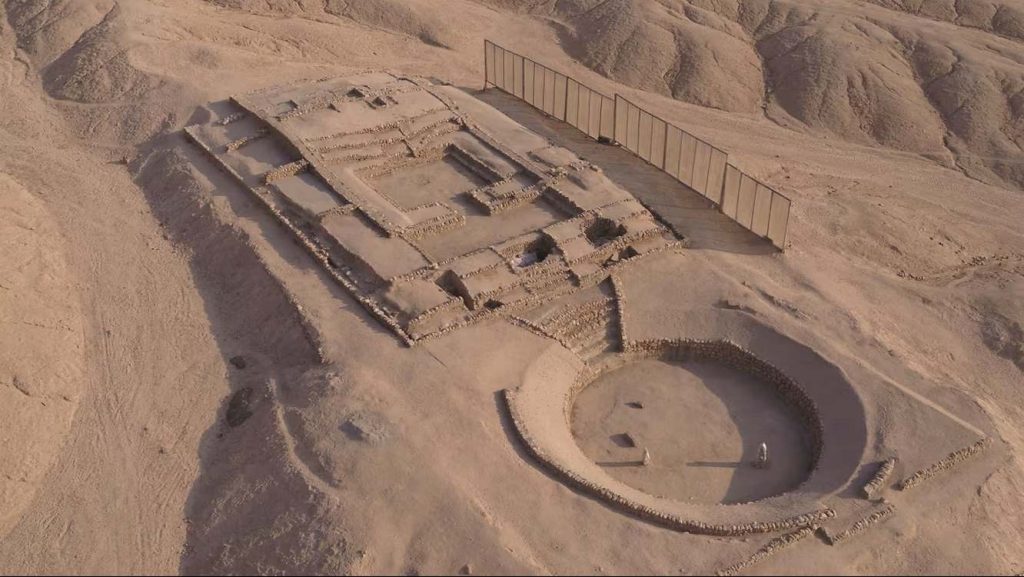
After years of dedicated exploration and research, a remarkable historical site in Peru, known as Peñico, has been unveiled to the public. This ancient settlement dates back to approximately 3,800 years ago and is located north of Lima, the modern capital. Peñico once served as a vital link between the Andean mountains and the coastal civilization of Caral.
Caral-Supe is considered one of the world’s earliest civilizations and has a cherished place in the history of the Americas. As Caral’s influence began to wane, Peñico emerged, inheriting both its cultural richness and its connections to the surrounding regions.
So far, archaeologists have uncovered 18 significant structures in Peñico, perched 1,800 feet above sea level. Among these, a striking public center stood out, where exquisite artifacts such as conch shell instruments and clay figurines have been discovered. This center is a testament to the sophistication of a society that thrived in the shadows of its predecessors.
Ruth Shady Solis, the principal researcher and director of the Caral Archaeological Zone, shared insights on the site’s importance. She explained that Peñico played a crucial role in connecting various communities—from coastal towns to higher altitudes, bridging the rich tapestry of cultures in Supe and Huaura.
Excitingly, radiocarbon dating has revealed that Peñico likely flourished during the period when Caral was experiencing its decline. This interesting overlap indicates a fascinating transition of power and prestige; as Caral faded from prominence, Peñico rose, maintaining the trade and cultural networks established long ago.
The legacy of Peñico echoes similar patterns found in other ancient civilizations. Just as Eridu, the first city in Mesopotamia, gave way to Uruk, the society of Peñico grew by harnessing its connections and resources, such as hematite—a red mineral deeply woven into Andean spirituality.
Today, Peñico is not just a relic of the past but an open invitation for those curious about history. Visitors can now wander through the archaeological trails, gaze at the stunning ruins, and learn at the interpretation center and museum dedicated to this ancient culture.
SHARE this exciting news about Peñico and inspire your friends to explore the wonders of Peru!
If you would like to see similar good news stories click here & Share this to brighten someone’s day.