

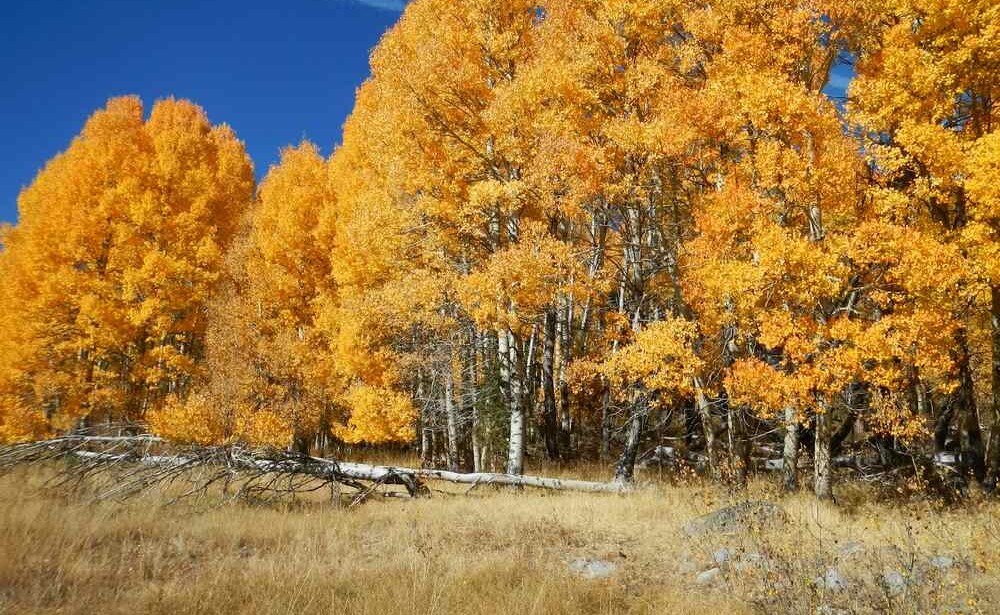
In a beautiful dance of nature, a unique story unfolds in Yellowstone National Park, showcasing the remarkable interconnections between species. This tale not only celebrates the return of the majestic aspen trees but also highlights the pivotal role of the gray wolf in this thriving ecosystem.
For the first time in over eight decades, young quaking aspens are making a triumphant return in the northern region of Yellowstone National Park. This rejuvenation of one of the West’s beloved trees can be traced back to the reintroduction of another iconic figure: the gray wolf.
You might wonder how aspen trees and gray wolves are intertwined. The answer lies in their connection to the park’s well-known inhabitants, the elk. Without wolves, elk populations surged. By 1995, these herbivores numbered around 17,000, wreaking havoc on young aspen sprouts, especially during the harsh late winters. Lacking protection from natural pruning, the aspen saplings struggled to grow, leaving older trees to decline without any younger replacements.
Research led by ecologist Luke Painter at Oregon State University shines a light on this relationship. In the past, aspen trees would attempt to sprout, but the hungry elk were always ready to feast, stunting their growth and leaving a barren landscape underneath the older trees. “The stands basically had older trees,” Painter explained. “Those were dying out, and then there wasn’t any new growth underneath to replace them.”
In a brave move, gray wolves were reintroduced to the park in 1995, sparking hope among conservationists that these apex predators would help manage the growing elk population. The results have been extraordinary! Painter and his team observed aspen stands in 2012 and returned in 2020 to check on their progress. They discovered that a staggering 43% of their sample sites had new saplings—trunks at least two inches in diameter—something scientists hadn’t recorded since the 1940s.
Moreover, there was an astonishing 152-fold increase in aspen saplings since the wolves’ return. This resurgence not only brightens the landscape but is also good news for smaller creatures like woodpeckers and wrens, who take shelter in the cavities of aspen trunks, and beavers, who adore using aspen for their dams.
This phenomenon is known as a “trophic cascade,” illustrating the ripple effects across the ecosystem when key species are restored. “The reintroduction of large carnivores has initiated a recovery process that had been shut down for decades,” Painter remarked, celebrating this remarkable example of ecological restoration. “Wolf reintroduction is yielding long-term ecological changes contributing to increased biodiversity and habitat diversity.”
As we marvel at this wondrous transformation, it reminds us of nature’s resilience and the deep connections that exist within every ecosystem. Yellowstone’s landscape is more vibrant than ever, proving that sometimes, bringing back one species can lead to a flourishing of many others.
SHARE This Hopeful Journey of Renewal in Yellowstone…
If you would like to see similar good news stories click here & Share this to brighten someone’s day.