

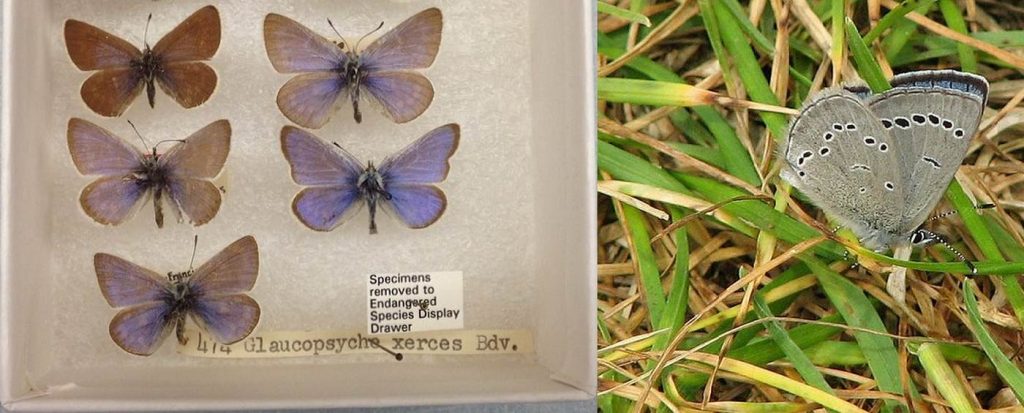
In a remarkable display of nature’s resilience, scientists at the California Academy of Sciences are undertaking an inspiring experiment to revive the heartbeat of a once-thriving ecosystem. They aim to see if a close relative of an extinct butterfly can step in to restore what was lost and reintroduce harmony to their coastal home.
Along the picturesque coastline of the San Francisco peninsula, where the majestic Golden Gate Bridge stands tall, a transformation is quietly unfolding. Here, a team of ecologists is embarking on a journey to heal the land while reconnecting with the delicate threads of nature.
Once, the Xerxes blue butterfly danced among the coastal dunes, playing a vital role in pollination within its habitat. This stunning creature tragically became the first invertebrate species to go extinct in North America due to the rapid urbanization sparked by the Gold Rush. Its home, the Presidio Peninsula, filled with lush greenery, slowly fell victim to development, erasing the Xerxes blue along with it.
Fast forward to today, with 30 years of dedicated restoration efforts by the Presidio Trust and the Golden Gate National Recreation Area, the stage is set for a stunning comeback. Professor Durrell Kapan, a senior research fellow at the academy, has discovered that the silvery blue butterfly is the closest living relative to the lost Xerxes blue. With renewed hope, the team set out to bring these vibrant insects back into the ecosystem.
“This project is a fantastic opportunity to rebuild those essential connections using its closest relative,” Kapan shared, emphasizing the importance of this endeavor in our ongoing efforts to mend the environment.
On a bright morning, Kapan and his colleagues filled cooler bags with little plastic cups, each cradling a silvery blue butterfly, happily sipping nectar from cotton balls soaked in fruit juice. They arrived at the restored dunes, eager to see their efforts take flight.
With the butterflies released into the wild, volunteers eagerly observed. Within moments, many butterflies began laying eggs, while others danced from flower to flower, delighted by their new surroundings. This marked the second successive year of silvery blue butterfly releases, and the signs of success were radiant; they were spotting unmarked butterflies, hinting at the growth of a sustainable population.
Dr. Phoebe Parker-Shames, a wildlife ecologist for the Presidio, articulated the dual purpose of this project: “It’s not just about correcting past mistakes, but also preparing for the future.” Her insight highlights that by reintroducing these butterflies, they’re bolstering the ecosystem’s resilience. Should one species face challenges from changing climates, another can step in and play a vital role.
The ongoing journey of the silvery blues serves not only as a lesson in conservation but as a beacon of hope for future ecological efforts everywhere. This endeavor is a reminder that through teamwork, perseverance, and a little bit of love for nature, we can help create a brighter future for our planet.
WATCH the story below from CBS…
SHARE This Story With Your Bay Area Friends On Social Media…
If you would like to see similar good news stories click here & Share this to brighten someone’s day.