

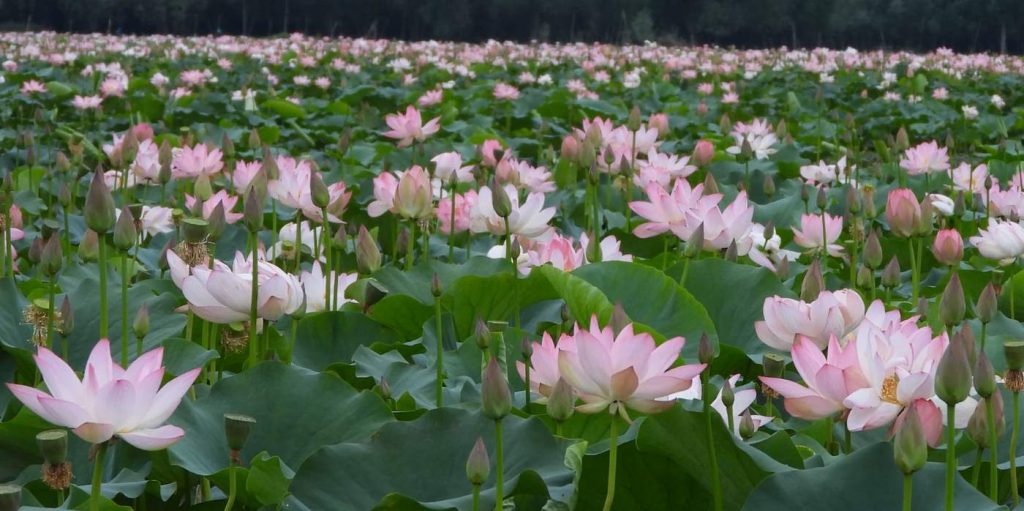
In a beautiful tapestry of nature and culture, a remarkable transformation is taking place in Kashmir. After decades of struggle, the enchanting lotus flowers are making a heartfelt return to Wular Lake, symbolizing hope for the local community and a revival of cherished traditions.
Wular Lake, once the largest water body in Kashmir, has faced immense challenges over the years. By the early 1990s, shoreline developments had drastically reduced its size. The final blow came in 1992, when catastrophic flooding deposited tons of sediment, suffocating the delicate lotus plants that had long been integral to the region’s culture and diet.
These lotus stems, often called “nadru,” were much more than a food source; they were a vital part of local life. At their peak, they supported around 5,000 workers, nourishing families and creating a thriving cottage industry centered around their harvest. Sadly, as the lake was choked with silt, the once vibrant tradition faded into memory.
As the years passed, Wular Lake shrank to just one-third of its original size, leading to a loss of biodiversity and a string of environmental issues. With despair creeping into the hearts of the local populace, it wasn’t until 2020 that a collective resolve began to take shape. The community, desperate to revive what was lost, joined hands with the Wular Conservation and Management Authority (WUCMA) to initiate a much-needed de-silting program.
Over five years, an astonishing 8 million cubic meters of silt were painstakingly removed from the lake. Gradually, life began to return, and the dormant lotus roots, which had quietly awaited their moment, sprang back to life. This year, for the first time in 33 years, the lotus flowers joyously began to bloom again, filling the lake with their beauty and the air with hope.
“This revival is a cultural resurrection,” said Meera Sharma, an environmentalist based in Delhi. “When nature heals, it brings back livelihoods, traditions, and richness to our lives. Watching these flowers blossom again feels like witnessing history come alive.”
The return of nadru rekindles memories and culinary traditions for many. “It connects our food to our land,” shared Tavir Ahmad, a local chef passionate about his heritage. “Now we can cook it just like our grandmothers used to—with love, care, and simplicity.”
As families come together to savor their cherished dishes once more, the reappearance of the lotus flowers stands as a testament to community resilience and the enduring bond between people and nature. It’s a story of rebirth, where hope and heritage flourish hand in hand.
SHARE this heartwarming journey of renewal, and let the beauty of nature inspire us all!
If you would like to see similar good news stories click here & Share this to brighten someone’s day.