

Get ready to be amazed by a groundbreaking discovery about our vibrant Sun! Scientists have unveiled stunning new images of a colossal solar flare, providing insights that could transform how we understand our closest star.
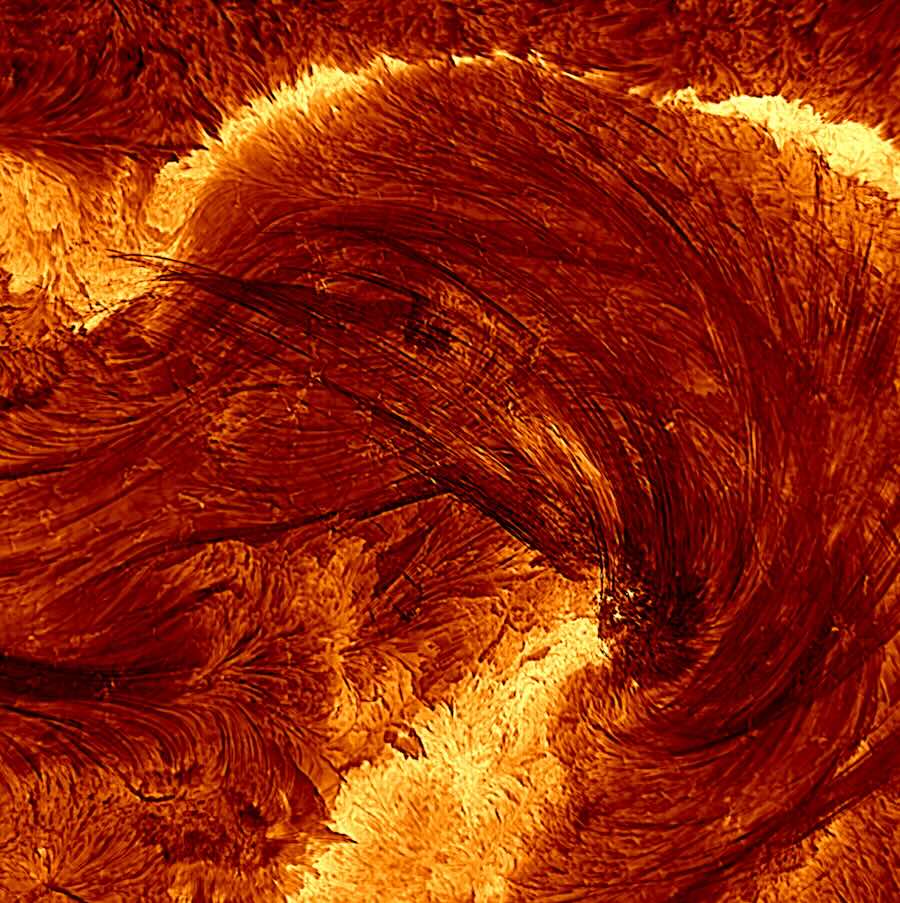
The incredible images come from the Daniel K. Inouye Solar Telescope, celebrated as the world’s largest solar observatory. For the very first time, this telescope captured the stunning details of a massive solar flare, which was an astonishing four times larger than our planet Earth!
Among the highlights of this remarkable observation were the coronal loops—fine strands of plasma measuring about 48.2 kilometers (over 30 miles) wide. Some of these loops were so narrow they measured just 21 kilometers (around 13 miles), representing the smallest coronal loops ever recorded. This level of detail could completely change how scientists view the Sun’s magnetism and improve predictions about space weather.
“This is a monumental occasion for the Inouye Solar Telescope,” shared Cole Tamburri, who leads the research while studying at the University of Colorado Boulder. “We were fortunate to capture such an energetic event under ideal conditions.”
During the decay phase of an X1.3-class flare, astronomers captured the dark coronal loops with unprecedented clarity. These magnificent arches of plasma are not just beautiful to look at; they follow the magnetic field lines of the Sun, often preceding the explosive release of energy seen in solar flares. These bursts can create solar storms that impact communication systems and infrastructure here on Earth.
The new findings offer a thrilling possibility: that these loops might serve as the basic building blocks of flare architecture itself. “If that’s true, we may soon be able to resolve individual loops for the very first time,” Tamburri notes with excitement.
“It’s like going from seeing a lush forest all at once to noticing every exquisite tree within it,” he explains, capturing the awe and wonder that comes with this discovery.
These insights not only illuminate the mysteries of our universe but also pave the way for better understanding and predicting solar activity. Together, we can celebrate these strides in science, marveling at the unseen wonders of our solar system!
If you would like to see similar good news stories click here & Share this to brighten someone’s day.