
Sure! Here’s a fresh and heartwarming take on the captivating discovery by NASA’s Perseverance rover.
Introduction
In a remarkable journey across the Red Planet, NASA’s Perseverance rover has uncovered intriguing evidence that might hint at ancient microbial life on Mars. This breakthrough discovery not only excites scientists but also fuels our curiosity about the universe and potential life beyond Earth.
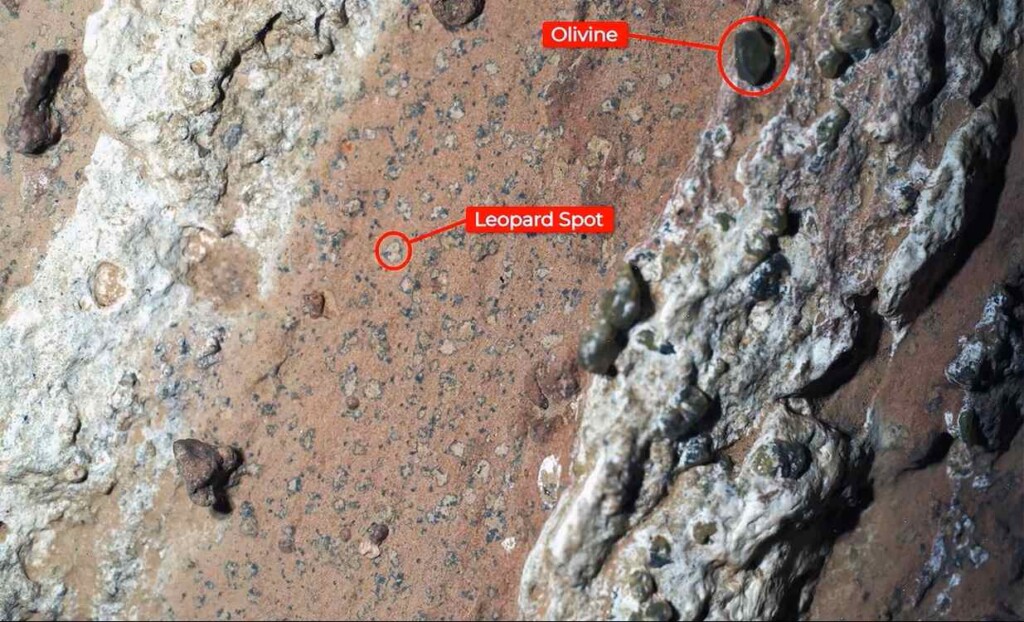
During a thrilling exploration deep within the Jezero Crater, the Perseverance rover made an electrifying discovery. It unveiled two minerals—vivianite and greigite—associated with microbial life on our own planet.
This tantalizing find sparked excitement among scientists and space enthusiasts alike. NASA’s Acting Administrator, Sean Duffy, expressed palpable enthusiasm, emphasizing that this could bring us closer than ever to understanding the potential for life on Mars.
So, what makes these minerals so special? Greigite, formed by magnetotactic and sulfate-reducing bacteria, is often found in watery environments like lakes and hydrothermal vents. Its presence hints at some of the conditions necessary for life, making it a key player in the search for Martian biology.
Meanwhile, vivianite—often discovered in intriguing locations like fossils and even human tombs—adds another layer of fascination. Despite its name suggesting a connection to life, it’s named after scientist John Henry Vivian.
Both minerals were found in a core sample from Neretva Vallis, an ancient river channel that once flowed into the Jezero Crater. This area, where Perseverance has been tirelessly exploring for nearly six years, holds clues to Mars’s watery past.
Sean Duffy couldn’t help but reflect on the significance of this moment: “This finding is groundbreaking. It’s the closest we have ever come to potentially discovering life on Mars, enhancing our understanding of the planet’s history.”
Interestingly, NASA is now shifting gears. Instead of planning an expensive sample return mission, they’ve opted to prepare for a human exploration that could include astronauts collecting these valuable samples directly. This decision reflects a bold vision for the future of space exploration.
Earth.com highlights the mesmerizing discovery: samples showed a ring of vivianite interspersed with the distinct “leopard spot” patterns of greigite. This intriguing pattern resembles those found in Earth’s biologically active sediments, suggesting a story waiting to be told.
While we can’t definitively say these minerals were created by life, they mark an important turning point in our quest to understand Mars. The prospect of uncovering more evidence of habitability in the Red Planet’s ancient past is growing brighter.
With this exhilarating breakthrough, the doors are now wide open. Future missions may shed light on whether these minerals are purely a product of biology or if they can form through other means. These findings could dramatically shift our approach to the mysteries of Mars.
The excitement surrounding these discoveries is palpable. It connects us not just to our universe but to the age-old question of whether we are alone in the cosmos. Each discovery on this journey draws us closer to answers that could change our understanding of life itself.
SHARE This HUGE MILESTONE In The Story Of Discovering Life Beyond Earth!
If you would like to see similar good news stories click here & Share this to brighten someone’s day.