

Every once in a while, archaeologists stumble upon treasures that remind us of the brilliance of our ancestors. In the ancient Roman town of Gabii, a remarkable stone-lined water basin has been uncovered, revealing layers of history intertwined with ingenuity, environmental harmony, and community life.
Tucked away in central Italy, Gabii was once home to a vibrant pre-Roman community before it faded into history by 50 BCE. Unlike the bustling city of Rome, which has been built over countless times, Gabii’s ruins have largely remained untouched, preserving its stories for the curious to find. Excavations began here in 2009 and have since revealed astonishing facets of ancient life.
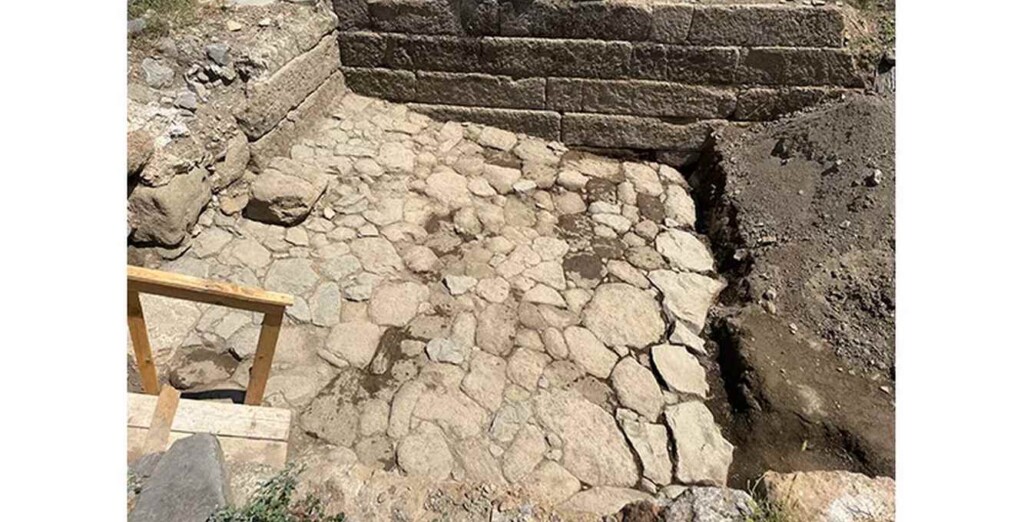
Recently, archaeologists made headlines by uncovering an exquisite water basin, elegantly crafted from carefully arranged stones. This masterpiece dates back to around 250 BCE, and it’s notable for being built without the concrete that Romans are famed for. Instead, the basin’s designers chose local stones, seamlessly uniting function with the natural landscape of Gabii, which lies near an ancient volcanic crater.
According to Marcello Mogetta, chair of classics, archaeology, and religion at the University of Missouri, this basin represents a significant engineering feat. “Basins like this are rare,” he explains, revealing that it predates popular building techniques like concrete and hydraulic mortar. The builders ingeniously utilized the natural slope of the land, showcasing their advanced understanding of architecture that has allowed their craftsmanship to endure for millennia.
What’s even more intriguing is the possibility of its use. Were the people of Gabii using it for practical purposes, serving their daily water needs? Or did it hold a ceremonial role, perhaps linked to sacred practices? Mogetta and his team aim to uncover these mysteries by delving deeper, exploring the original soil beneath the basin to see if it was fed by a spring or an underground water source.
The basin isn’t just an isolated find; it connects to a larger narrative. The skilled stone-stacking techniques seen in the basin are reminiscent of the sophisticated engineering found in ancient Roman roads. This highlights the enduring legacy and knowledge of the early civilizations that paved the way for future generations.
The University of Missouri currently holds a three-year permit to continue excavations as part of the Gabii Project, which focuses on unearthing the urban center’s treasures. Since the project’s inception in 2009, archaeologists have brought to light substantial portions of this once-thriving city, revealing remnants of life that long preceded us.
Previously, the area showcased little beyond the remnants of a temple dedicated to Juno. However, with modern surveying techniques, significant ancient city blocks have been uncovered, helping us piece together the rich tapestry of Gabii’s past.
As for the newly discovered basin, Mogetta believes it likely had a special significance. Nearby finds, including pottery and oil lamps, suggest it may have played a role in rituals or ceremonies, further underscoring the community’s deep connection to water and spirituality.
With every unearthed stone, a bit more of Gabii’s fascinating story is revealed, drawing us closer to understanding the lives that flourished there thousands of years ago. The remarkable basin is more than just a functional piece; it embodies the harmony between human craftsmanship and nature, inviting us to reflect on our shared history.
SHARE this inspiring tale of an ancient water basin with your friends!
If you would like to see similar good news stories click here & Share this to brighten someone’s day.