

In a remarkable tale where history meets science, an ancient shipwreck reveals a treasure trove of lead ingots that play a crucial role in the quest to uncover the mysteries of dark matter. This story not only highlights the bridge between our past and future but also showcases the spirit of collaboration across disciplines.
A Shipwreck with a Purpose
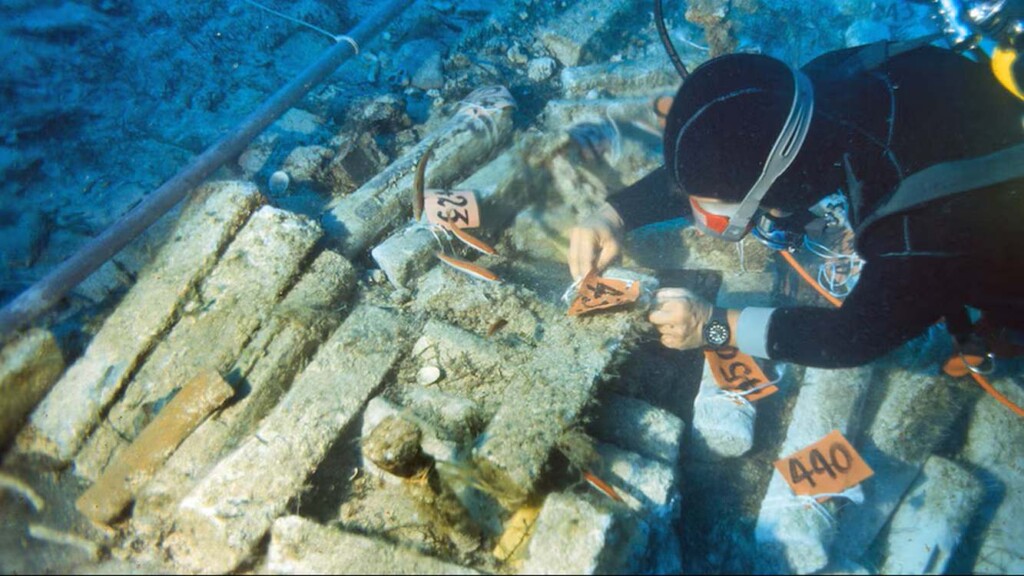
Picture the Mediterranean Sea, around 50 to 80 BCE. A merchant ship, laden with heavy cargo, is navigating its way around Sardinia, filled with carefully crafted lead ingots from Spain. These bars were intended for essential Roman projects—be it constructing aqueducts or munitions—yet an unforeseen storm arises, sending the vessel crashing into the depths, where it rests for centuries.
Fast forward to 1988, when archaeologists made a groundbreaking discovery: the long-lost shipwreck was finally unearthed! Among the team members was Dr. Ettore Fiorini, not your typical archaeologist, but a dedicated physicist at Italy’s National Institute of Nuclear Physics (INFN). While others marveled at the historical find, Fiorini had his eyes set on the lead ingots.
You see, lead is a perfect material for shielding particle detectors—essentially, it keeps out unwanted radiation. The twist? The Roman lead, which had resided submerged in saltwater for 2,000 years, had decayed to the point where its radioactivity was virtually nonexistent. This made it an ideal choice for Fiorini’s experiments, where he aimed to detect dark matter—the elusive substance believed to form a significant part of the universe.
Bridging Time and Science
Ethical debates swirled around the decision to melt down such ancient artifacts for modern science. The lead bars were stamped with Latin inscriptions, invaluable markers of their origin, which conveyed stories of a past long forgotten. Recognizing the historical significance, Fiorini and his team approached the archaeologists with a thoughtful proposal: they would assist in recovering the shipwreck while preserving the artifacts’ legacy, thanks to funding and support from the INFN.
Together, they agreed to document every ingot meticulously, allowing scientists like Dr. Paolo Gorla to analyze them on a molecular level and paint a picture of their journey through time. “It was like an ID card,” Dr. Gorla explained, shedding light on how they could trace the lead back to its source in Spain.
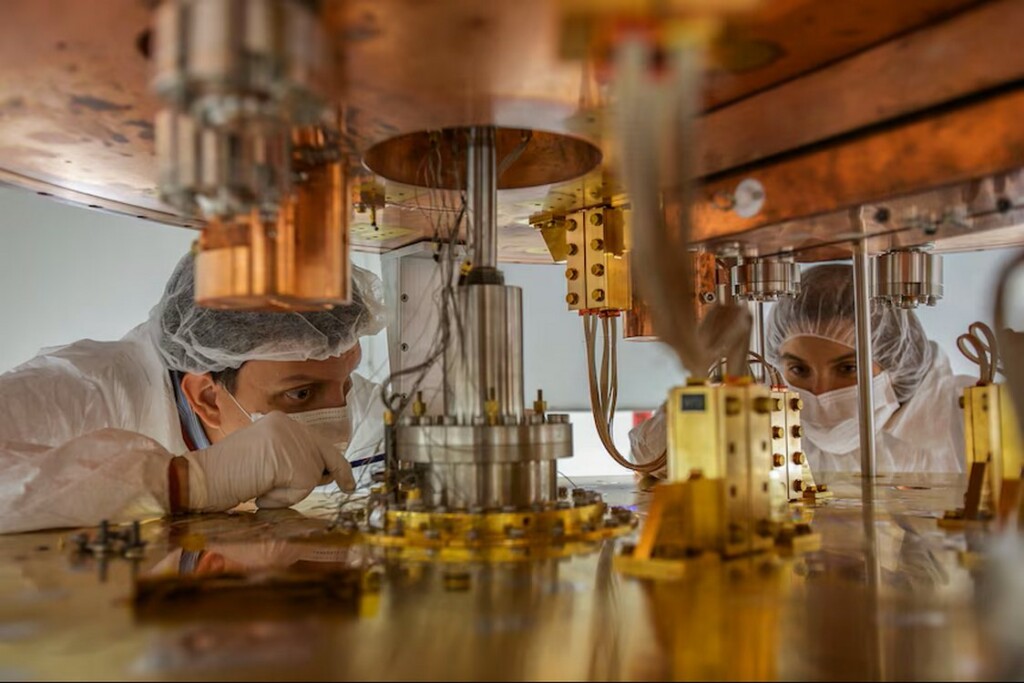
This collaborative effort was more than just an exchange—it was a union of two loves: one for the ancient history of Rome and the other for the mysteries of the universe.
The long-awaited lead made its way to the INFN in 2010, and by 2017, it had been transformed into a protective shield for the CUORE (Cryogenic Underground Observatory for Rare Events) detector, situated beneath the Gran Sasso mountain. Here, amidst the shelter of the mountain and the protective embrace of Roman lead, the CUORE detector began its pivotal work in the search for dark matter.
Sadly, Dr. Fiorini passed away in 2023, leaving behind a legacy intertwined with the ancient world and our ongoing quest to understand the cosmos. As CUORE continues its groundbreaking experiments, it remains a testament to the unyielding spirit of inquiry that connects us to our past while reaching for the stars.
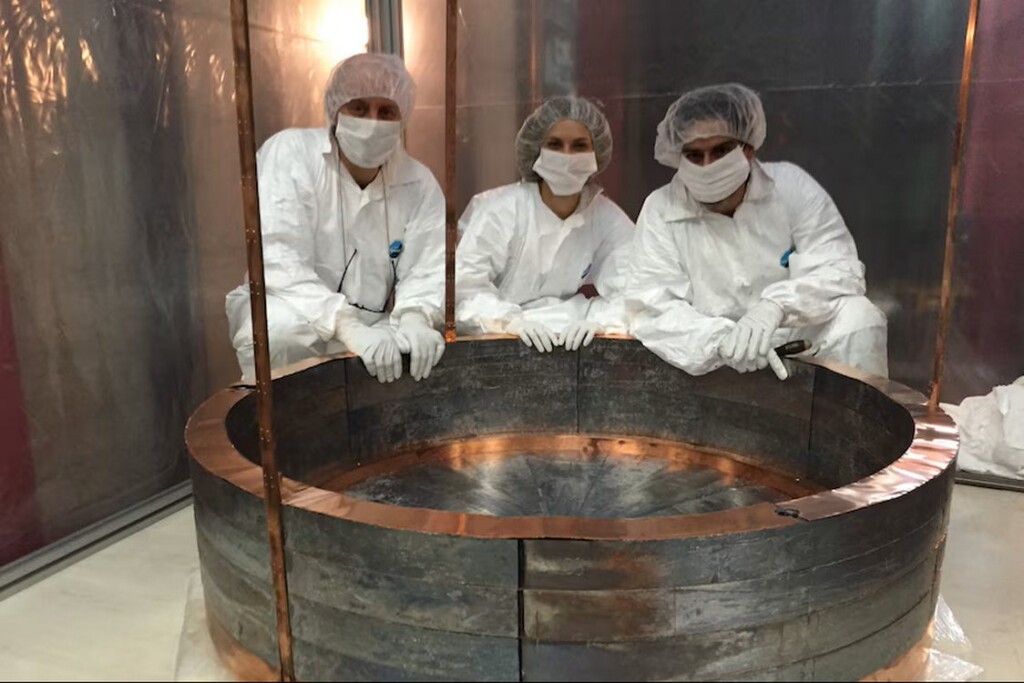
Dr. Gorla emphasizes how, without the unique quality of this ancient lead, their research might not have reached its current level of precision. The tale of a sunken ship linking to the pursuit of dark matter is a beautiful example of how time can intertwine—honoring the past while striving for understanding in the present.
SHARE this heartwarming story of collaboration and scientific curiosity!
If you would like to see similar good news stories click here & Share this to brighten someone’s day.