

In the heart of Minnesota, a group of innovative scientists is paving the way for a brighter future in spinal cord injury recovery. Their pioneering work combines advanced 3D printing techniques with the incredible potential of stem cell biology, offering hope where little existed before.
A team of researchers at the University of Minnesota Twin Cities embarked on a remarkable journey to tackle the devastating effects of spinal cord injuries. Typically, once the spinal cord is damaged, the road to recovery is fraught with challenges. Damage to nerve cells has long been believed irreversible, leaving many individuals facing paralysis without hope for restoration.
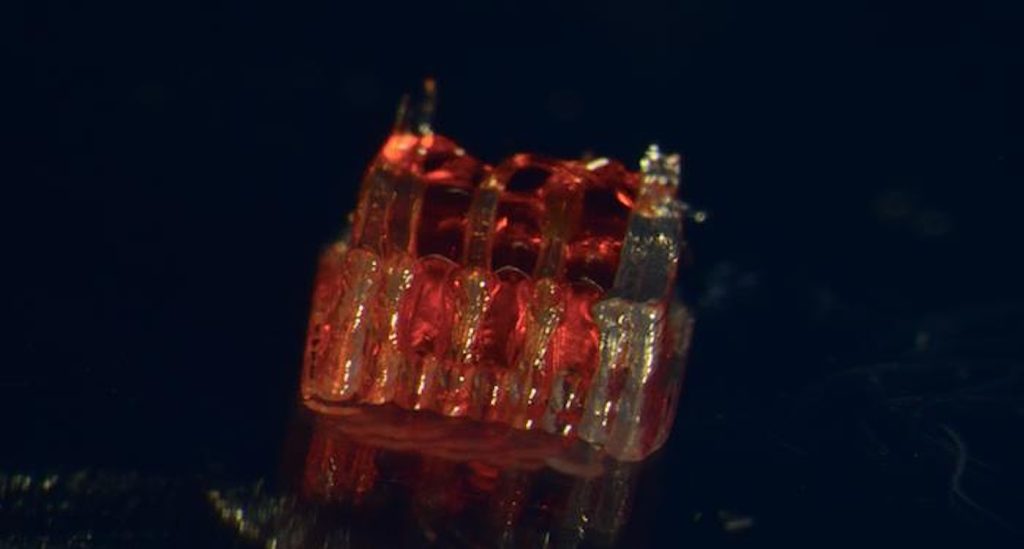
However, this dedicated team unearthed a promising solution: a unique method that involves creating a 3D-printed scaffold. This design features tiny channels that serve as pathways for growth, allowing the insertion of spinal neural progenitor cells derived from human adult stem cells. These special cells can develop into various types of mature nerve cells needed for recovery.
“By utilizing the intricate 3D printed channels, we can guide the stem cells to grow in an organized manner, fostering the vital connections needed for recovery,” explained Dr. Guebum Han, who played a crucial role in this groundbreaking research.
Their study, which received funding from notable institutions including the NIH and the State of Minnesota, involved transplanting these innovative scaffolds into rats whose spinal cords had been completely severed. What happened next was nothing short of miraculous: the stem cells began to transform into functioning neurons, sending nerve fibers stretching both toward the head and tail, effectively reconnecting with existing nerve pathways.
This seamless integration of new nerve cells into the rat’s spinal tissue led to significant improvements in movement and functionality—testaments to the potential of this breakthrough. Ann Parr, a professor of neurosurgery at the University of Minnesota, emphasized, “We are thrilled to be part of this new era in spinal cord research, and we are eager to explore the clinical possibilities of our mini spinal cord models.”
While this research is still in its early stages, it opens new avenues of hope for individuals affected by spinal cord injuries. The team is optimistic about scaling up their methods and continuing to advance these groundbreaking technologies to help restore lives.
SPREAD SOME HOPE By Sharing The Good News on Social Media…
If you would like to see similar good news stories click here & Share this to brighten someone’s day.