

In a tale that beautifully intertwines technology and nature, researchers at MIT have embarked on an inspiring journey to replicate the incredible work of bees through robotics. Their innovative spirit has led to remarkable advancements, promising to enhance both our environment and agriculture in ways we never thought possible.
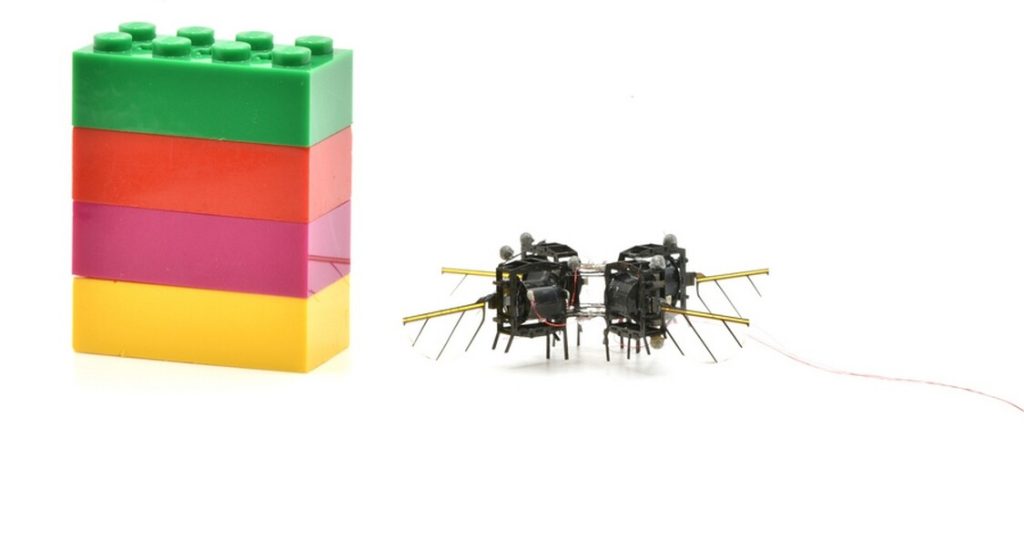
In 2021, the brilliant minds at the Massachusetts Institute of Technology aimed to mimic the astonishing abilities of bees by crafting a robotic pollinator. Initially, their designs featured an unusual configuration of eight wings and four bodies, which proved to be less efficient than anticipated. Yet, rather than giving up, they embraced the challenge and reimagined their approach.
Their latest creation is not just any robot; it’s a groundbreaking model that boasts two bodies and four wings, amplifying its efficiency by an impressive hundredfold. Capable of flying for up to 17 minutes, this new robotic bee has secured a special place in agricultural research. Recently, a study published in Science Robotics highlighted how these mechanical creatures could provide vital assistance in indoor vertical farms, especially in conditions where real bees struggle to thrive.
Imagine a world where robotic bees can navigate through fluorescent-lit gardens, helping to pollinate crops that might otherwise go without. These little wonders could even venture into more challenging environments such as space or areas impacted by radiation—environments where traditional bees cannot survive.
Kevin Chen, an associate professor at MIT and head of their Soft and Micro Robotics Laboratory, expressed his excitement about these advancements. “The total flight time we achieved is likely greater than all previous robotic insect flights combined,” he shared. His enthusiasm reflects the huge potential for these tiny robots in boosting pollination efforts.
One of the significant improvements stemmed from simplifying their structure, reducing the number of bodies from four to two. This change allowed each unit to perform better individually, and less drag from their four wings accelerated their flight. The new design even enables aerial maneuvers like flips, showcasing the incredible agility of this innovative creation.
At the core of this breakthrough are actuator systems made from layers of elastomer. These advanced components, sandwiched between ultra-thin carbon nanotube electrodes, provide rapid motion to the wings, generating the necessary lift with remarkable efficiency.
Furthermore, the engineering team has tackled the complexity of flapping mechanics by enhancing the hinges, leading to a threefold increase in control torque. According to Chen, this improvement paves the way for intuitive flight patterns and more precise navigation, bringing them closer to creating a robotic helper that could gently hover and take off from within a flower.
As the journey continues, the team aims to stretch the limits of their designs, aspiring for flight times ten times longer than their current capability, while perfecting controlled take-offs and landings. Their efforts embody the spirit of innovation and hope for a future where technology and nature work hand in hand.
SHARE this inspiring journey of the Mechanical Bee with your friends to spread the word about the future of pollination!
If you would like to see similar good news stories click here & Share this to brighten someone’s day.