

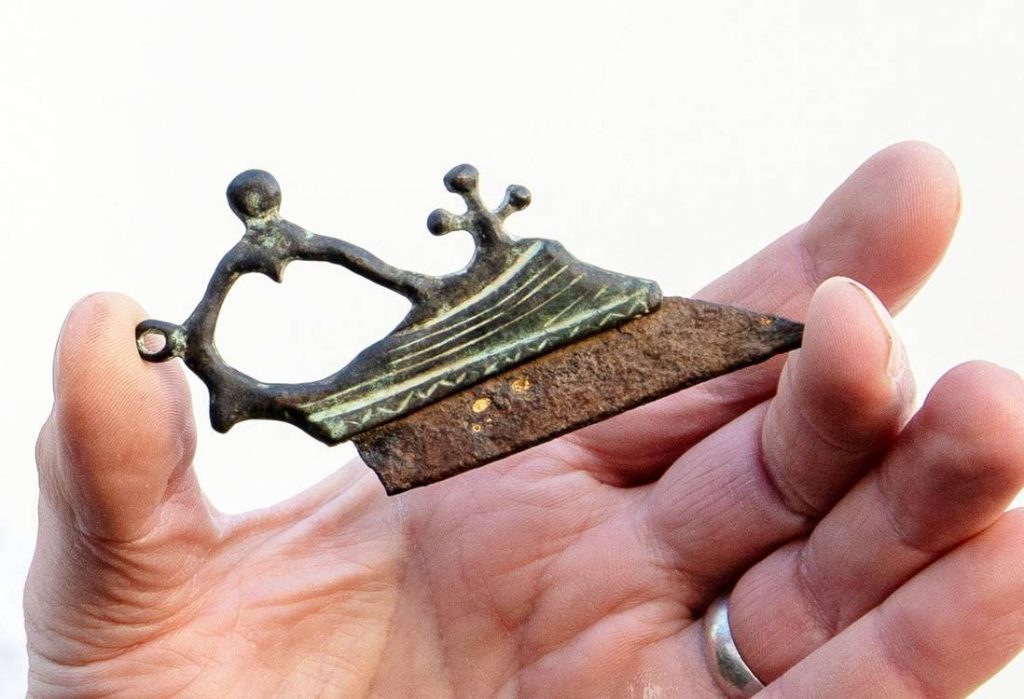
Here’s a heartwarming retelling of a fascinating discovery, shining light on the timeless art of grooming that once defined an ancient civilization.
Sometimes, history speaks to us in the most unexpected ways, revealing stories of everyday life long forgotten. A charming little artifact has emerged from the depths of time, offering a glimpse into the grooming rituals of the Romans. Vintage finds like this razor not only remind us of the past but also evoke the universal desire for care and presentation.
In a quaint auction house in England, an extraordinary discovery is set to capture the attention of history enthusiasts and collectors alike: a 2,000-year-old Roman razor. Measuring about 3.5 inches long, this piece carries a rich lineage and offers unique insights into Roman grooming habits.
This iron blade is not merely an object; it has a story to tell. With a clever design that includes a finger hole for steady handling, one could deftly glide it across the skin, ensuring a smooth shave. Auctioneer Charles Hanson aptly muses about its past, saying, “Imagine if it could speak. What ancient chins did it touch, and what secrets did they hold?” This delightful inquiry resonates, hinting at the myriad individual stories woven into the fabric of its history.
For the affluent Romans of yore, being clean-shaven was more than a mere aesthetic choice; it was a marker of civilization and style. This trend, referred to as urbanitas, defined much of Roman society. Statues and busts showcase prominent figures, like Julius Caesar and Nero, without facial hair, showcasing the deep cultural roots of this practice.
The early emperors set the tone as they were often depicted in their polished, smooth-skinned glory. However, the tides turned after Emperor Hadrian, whose successors began embracing beards, much like individual expression in modern times.
Yet, for the elite, the act of shaving was steeped in risk. With assassination lurking around every corner, trusting a barber could feel precarious. Historical anecdotes reveal that Emperor Domitian, wary of potential threats, restricted barbers from operating in crowded areas. In an interesting twist, Dionysus even trained his daughters to perform his shaves, a testament to the era’s palpable fears.
As Simon Bartley, a historical consultant for the auction house, notes, “Roman razors, known as novacilae, were highly valued and not frequently seen outside private collections.” The delicate craftsmanship of this razor showcases a time when grooming signified a transition into manhood, celebrated through ceremonial shaving at the age of 21.
This significant event, termed depositio barbae, symbolized maturity, with the freshly shorn hair often offered as a religious gesture, further connecting the act of grooming with spirituality.
Adding to the charm, the razor is just one part of a long lineage of grooming tools, paving the way for more advanced implements like the forfex. This early version of scissors reflects humanity’s ongoing desire for personal care throughout the ages.
Such fascinating artifacts not only enrich our understanding of the past but also remind us of the shared human experience of social norms and self-presentation across cultures and epochs. This Roman razor stands as a timeless testament to the art of grooming and the bonds of tradition it has fostered, inviting us all to reflect on our own ways of expressing identity.
Share this delightful slice of history with friends who cherish tales of the past!
If you would like to see similar good news stories click here & Share this to brighten someone’s day.