

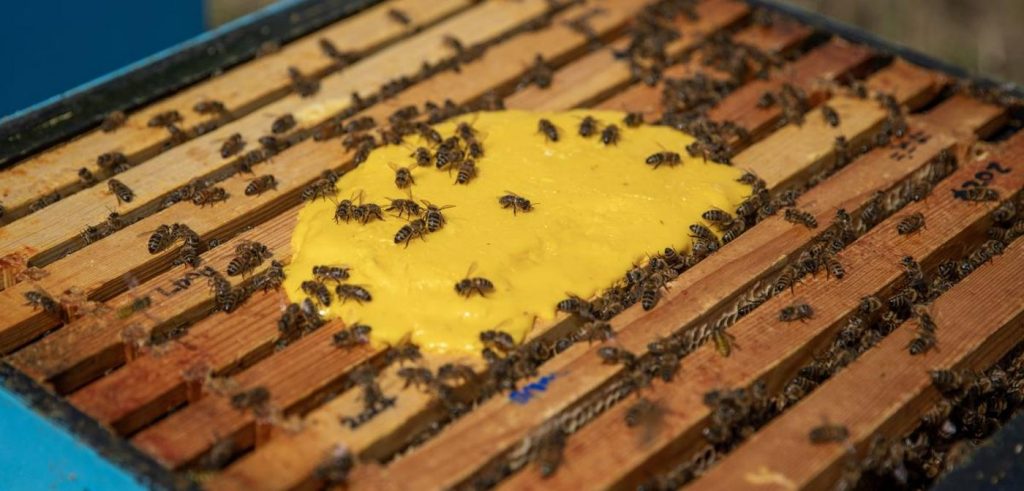
In a delightful twist for our buzzing friends, a team from Oxford University has found a way to give honey bees a new lease on life through innovative nutritional science. As nature faces challenges, this uplifting story reveals how dedicated researchers are striving to protect bee populations and, in turn, our essential food supply.
In a world where honey bees are facing growing challenges, researchers at Oxford University have turned their attention to one of their essential needs: nutrition. The team has been working tirelessly to create an ideal dietary supplement that can support honey bees, especially as natural pollen sources dwindle.
Traditionally, synthetic pollen substitutes have been used, but replicating the complex blend of nutrients in natural pollen has been a significant hurdle. Fortunately, the Oxford researchers have cracked the code by developing a fermentation technique that creates a balanced diet mimicking nature’s design.
Imagine a bee colony thriving, rearing 15 times more larvae thanks to this innovation! The researchers, along with colleagues from Denmark and the Royal Botanic Gardens Kew, engineered a specific strain of yeast, Yarrowia lipolytica, to produce six essential sterols—nutrients crucial for bee development.
While it’s wonderful to dream of bees thriving in a garden full of wildflowers, the reality is that many regions, particularly in Europe, are seeing a decline in native plants. This shortage makes it critical to ensure that honey bees, which sometimes outcompete native pollinators, have access to the nutrients they desperately need.
Understanding the challenges bees face, the scientists set up a controlled study. One colony was fed their innovative, sterol-enriched diet, while a control group received a commercially available option. Over the course of the study, the difference was astonishing. The bees fed the enriched diet not only reared significantly more larvae but also continued their reproductive efforts longer than those on the standard diet.
Dr. Elynor Moore, the study’s lead author, shared, “For bees, the difference would be like the contrast between a balanced meal and one lacking essential nutrients.” This breakthrough highlights the potential of precision fermentation to create a tailored nutritional solution for bees to thrive.
To uncover which nutrients were lacking in bees’ diets, the team even performed surgeries on individual bees to gain insight into their nutritional needs. This meticulous attention to detail not only underscores their commitment but also highlights the importance of understanding these creatures on a deeper level.
By utilizing advanced techniques like CRISPR gene editing, the researchers have successfully designed the yeast to produce these vital compounds in ways that are both sustainable and economically viable.
This work is particularly significant because many of the fruits and nuts we enjoy depend on bees for pollination. By ensuring that these hardworking pollinators are well-fed, we can support not just bee populations but also the future of agriculture. The path to resilience for both bees and our global food supply is growing increasingly hopeful.
Let’s celebrate this positive news and spread the word about the efforts being undertaken to support our invaluable bees!
If you would like to see similar good news stories click here & Share this to brighten someone’s day.