

In the world of scientific discovery, moments of hope shine brightly like stars on a clear night. This uplifting story dives into the innovative strides being made to protect our cells’ vital DNA from the ravages of aging, potentially transforming our approach to health and longevity.
The journey toward this groundbreaking discovery begins with a vital component of our cells—the mitochondria. Often referred to as “the powerhouses” of the cell, their responsibilities extend far beyond mere energy production. Mitochondria house their own DNA, known as mitochondrial DNA (mtDNA), which plays a crucial role in cellular functions.
Each cell contains multiple copies of mtDNA, yet when these copies suffer damage, they often deteriorate without repair. This degradation can trigger a series of health issues, including heart problems, neurodegeneration, and chronic inflammation.
To tackle this formidable challenge, researchers at UC Riverside have developed an innovative chemical probe that targets and binds to those damaged sites in mitochondrial DNA. This remarkable breakthrough holds the promise of preventing mtDNA loss, a condition linked to various diseases. Linlin Zhao, the project lead, emphasizes the significance of proactive measures, stating, “Our strategy is to stop the loss before it becomes a problem.”
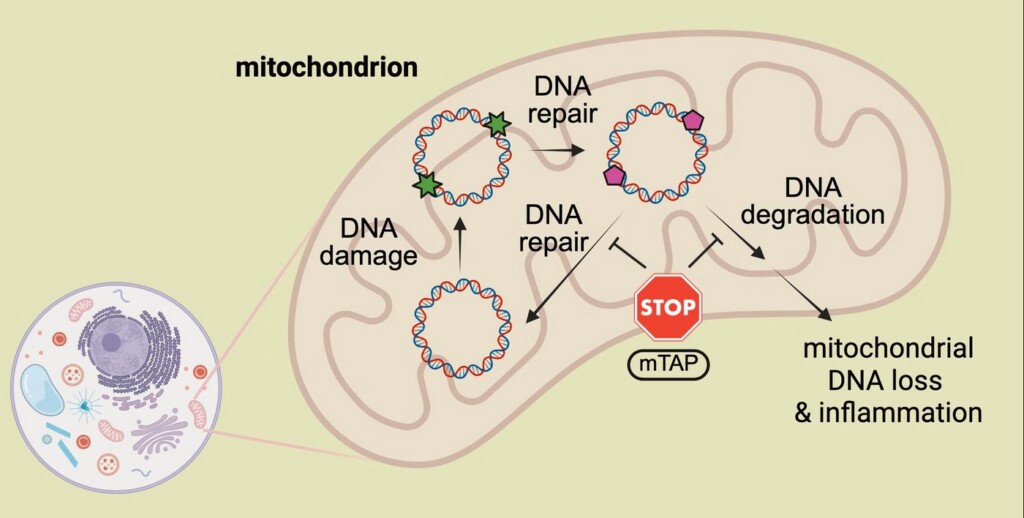
The chemical probe comprises two essential components: a segment that identifies damaged DNA and a mechanism that ensures its delivery exclusively to the mitochondria, avoiding any impact on the nuclear DNA. Lab tests illustrate how effective this probe can be; it significantly decreased mtDNA degradation even when mimicking harmful exposure to toxins commonly found in processed foods and pollutants.
In cells treated with this probe, the levels of mtDNA remained high, vital for sustaining energy, especially in crucial organs like the heart and brain. The loss of mtDNA is increasingly linked to serious conditions such as mitochondrial depletion syndromes, diabetes, Alzheimer’s disease, and various chronic inflammatory disorders.
“If we can keep the DNA inside the mitochondria, we might prevent the inflammatory signals that lead to these diseases,” Zhao explains, offering hope for the future of health.
Despite the added chemical tags, the researchers discovered that the mtDNA remained functional, demonstrating an impressive adaptability. “We initially feared that our chemical might hinder the DNA’s activity,” Zhao recalls, “but it still supported the necessary processes to convert DNA into RNA and proteins. This has exciting implications for therapeutic uses.”
Building on more than two years of dedicated research, this project signifies a paradigm shift in how we view DNA damage and mitochondrial health, focusing not solely on repair but prevention. As Linlin Zhao aptly puts it, “This is a new approach to safeguarding the genome under stress.”
SPREAD THE WORD: Share this story about a promising breakthrough in anti-aging research and its potential impact on our health!
If you would like to see similar good news stories click here & Share this to brighten someone’s day.