
In a world where safety often plays second fiddle to style, the story of Virginia Tech’s Helmet Lab shines as a beacon of hope and diligence. Through innovative research and unwavering dedication, a group of passionate students is transforming the way we think about protective headgear across various sports.
Back in 2011, a simple inquiry from the Hokies’ equipment manager sparked a remarkable journey for Steve Rowson and his engineering classmates at Virginia Tech. They were asked to evaluate the safety of football helmets on the market. Intrigued, they embarked on a mission to conduct rigorous impact tests, revealing surprising variations in protection levels among different brands.
Thus, the “Helmet Lab” was founded. Rowson eventually stepped into the role of director, with a vision to empower the next generation of engineers. His goal was to create the VA Tech Helmet Rating, an unbiased resource to guide consumers in making informed helmet choices.
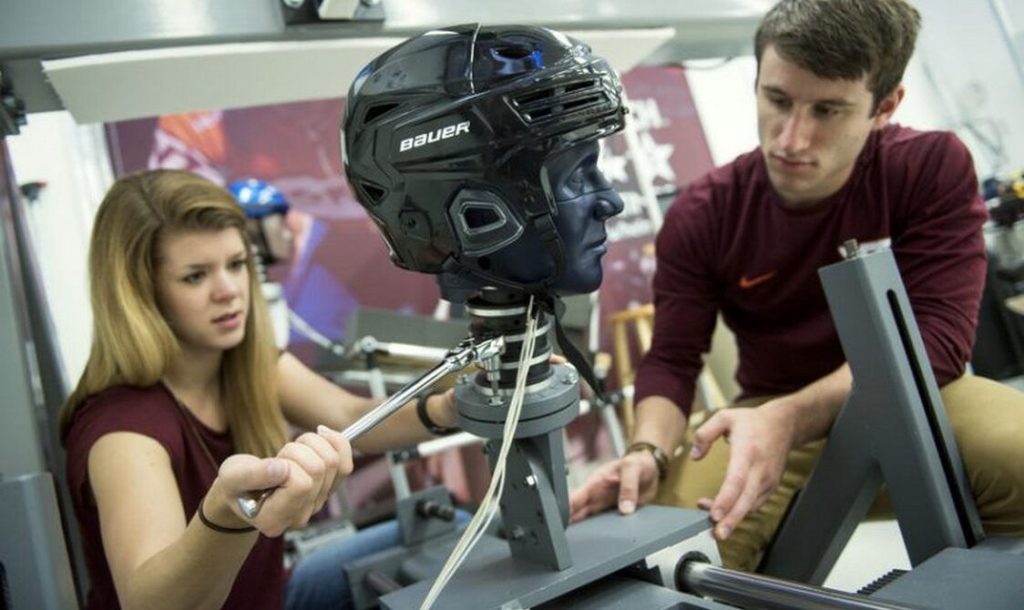
Over the years, the lab expanded its horizons, embracing a wide array of helmets—everything from cycling and football to helmets for snow sports, construction, baseball, hockey, and even equestrian events. Each helmet undergoes meticulous testing tailored to its specific use.
Reflecting on the project, Rowson recalled that while assessing helmet safety wasn’t completely new, the idea gained momentum from the decades-old suggestion of embedding sensors in helmets to monitor head impacts. His enthusiasm for the lab’s progress resonates with anyone who understands the vital role of protecting athletes in sports.
The impact of the Helmet Lab has been profound, catching the attention of manufacturers striving for that coveted 5-star safety rating. At the same time, parents and athletes are increasingly interested in ensuring they get maximum protection for their investment. Students found themselves immersed in a captivating intersection of science and real-world application, all aimed at reducing brain trauma in sports.
Testing helmets is far from straightforward. The lab’s equipment meticulously simulates the unique conditions of each sport. For example, a child cycling will typically hit the ground differently than an adult, which requires adjustments in testing parameters. The team accounts for various surfaces and impact scenarios—whether it’s a football player’s helmet colliding, a hockey player hitting the ice, or a snowboarder tumbling on snow.
Each rating produced by the lab embraces these differences, bringing together data from machines designed to measure both linear and rotational forces. The less energy transmitted to the head, the better the helmet’s protective performance, resulting in a higher star rating—an outcome every athlete desires.
“When it comes to buying a helmet, people want to know how much protection they’re getting,” Rowson shared. “As we began to share our findings, it became clear to manufacturers that ‘safety sells.’” This revelation has resonated across all areas of helmet evaluation.
WATCH the CNN segment below…
SHARE This Important Public Safety Science Work At VA Tech…
If you would like to see similar good news stories click here & Share this to brighten someone’s day.