

Sometimes, the most overlooked resources can lead to the most innovative solutions. This uplifting story highlights how a startup in New Zealand is transforming waste materials into valuable minerals for battery production, all while promoting sustainability and creating a brighter future.
In the picturesque landscapes of New Zealand, a remarkable startup called Aspiring Materials is making waves in the world of clean technology. Their mission? To radically change the way we think about waste. Instead of letting olivine—an ordinary mineral often dismissed as landfill—go unnoticed, they’ve discovered its potential to yield essential battery materials.
Often found in mountains of leftover rock from mining operations, olivine has been considered just a byproduct. Traditionally, it serves niche purposes like adding beauty to jewelry as peridot or heating up sauna rocks in Finland. Yet, Aspiring Materials has uncovered a treasure trove hidden within those unassuming heaps.
The company has harnessed the mineral’s ability to produce nickel-manganese-cobalt hydroxide, a crucial component for lithium-ion batteries. These batteries are now key players in powering everything from electric cars to solar energy storage systems.
With cobalt primarily sourced from the Democratic Republic of the Congo—a region marred by humanitarian issues—coupled with nickel from Indonesia and manganese from South Africa, the global supply chain is fraught with risks. Aspiring Materials is stepping in to shift the narrative, embracing a more sustainable and responsible approach to resource extraction.
The company’s innovative method involves a low-temperature, ambient pressure process that utilizes renewable energy. Instead of mining fresh materials, they extract valuable components from olivine that’s already sitting around as waste.
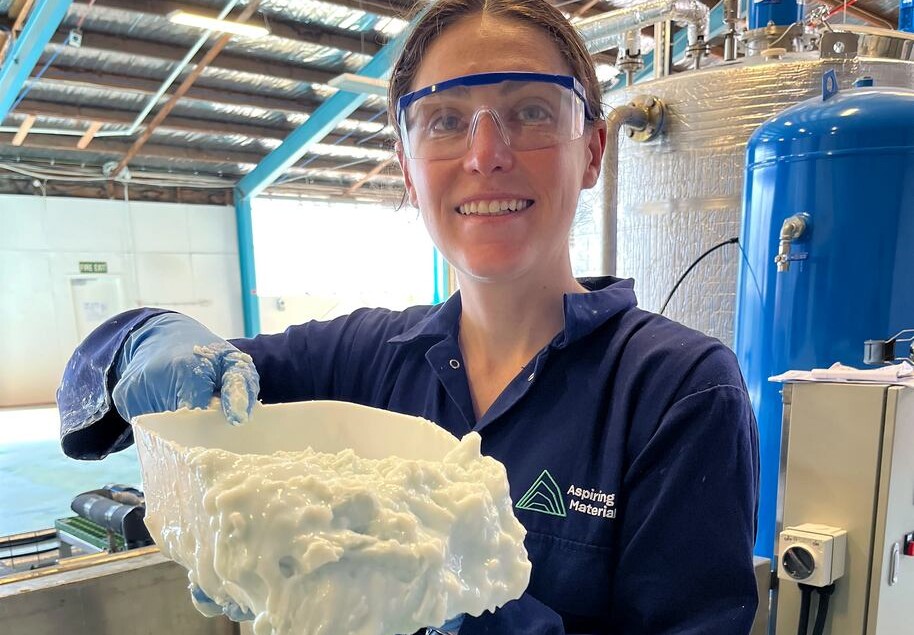
Imagine this: in their small pilot plant in Christchurch, olivine sand is mixed with sulfuric acid, transforming it into a bubbling, sticky mixture. Through a series of processes akin to those in a dairy, this pioneering team fine-tunes particle size and manages temperatures, ultimately producing three valuable products. Remarkably, 50% of the material can be used as a substitute for Portland cement, while 40% becomes a magnesium product sought after for its versatility. The remaining 10% includes precious nickel-manganese-cobalt hydroxide.
What’s even more inspiring? The liquid left over is recycled through electrolysis, generating the original acid needed for the extraction, creating a beautifully efficient circular economy. This inventive technique reminds us of the remarkable possibilities that come from creative problem-solving.
As Jim Goddin, a UK expert in critical minerals, points out, the slightly higher costs associated with the acidic extraction process are becoming increasingly acceptable. Western markets are beginning to recognize the value of clean production methods that do more than just save resources—they also protect our planet.
Through resilience and innovation, Aspiring Materials is not just changing how we view waste; they are pioneering a path toward sustainable technology that benefits us all. And as they turn the old into gold, they shine a light on how creativity and determination can lead to a greener future.
SHARE This Story With Your Friends Who Work In Circular Markets…
If you would like to see similar good news stories click here & Share this to brighten someone’s day.