

In a stunning blend of science and wonder, the largest spectroscopic telescope in the world has just made its inaugural observations from the heights of the Chilean Andes. This groundbreaking achievement not only marks a significant milestone in astronomical research but also fuels the curiosity of over 700 scientists eager to unravel the mysteries of the universe.
High above the picturesque landscape of Paranal, Chile, a dream has come to light. The 4-meter Multi-Object Spectroscopic Telescope, affectionately known as 4MOST, has emerged as a beacon for astronomers worldwide. This state-of-the-art instrument is poised to become a game-changer in our understanding of cosmic phenomena.
One of the telescope’s incredible capabilities lies in its power of spectroscopy—the science of analyzing light. By scrutinizing the light spectra emitted by celestial bodies, astronomers gain insight into their composition and characteristics. This can reveal whether a distant star is made of gases, solids, or something exotic, opening up a treasure trove of potential discoveries.
What sets 4MOST apart is its unparalleled ability to simultaneously examine 2,400 celestial objects, breaking them down into 18,000 distinct color components. Imagine capturing a dazzling array of hues while exploring the vast expanse of the night sky—all in just 10 to 20 minutes! This remarkable capability allows researchers to amass a rich catalog detailing temperatures, chemical makeups, and more for millions of objects in the southern sky. This database will become an invaluable resource for countless scientific inquiries in the years ahead.
Professor Richard Ellis from University College London expressed his excitement upon receiving the telescope’s first light data. “It’s exhilarating to see such rich data coming through,” he shared, highlighting how his team will utilize this extraordinary tool to study supernova explosions and other cosmic events.
At the helm of this monumental project, Roelof de Jong from the Leibniz Institute for Astrophysics spoke emotionally about the instrument’s debut. “The first spectra are incredible! The initial data looks excellent and promises so much for our future research,” de Jong noted.
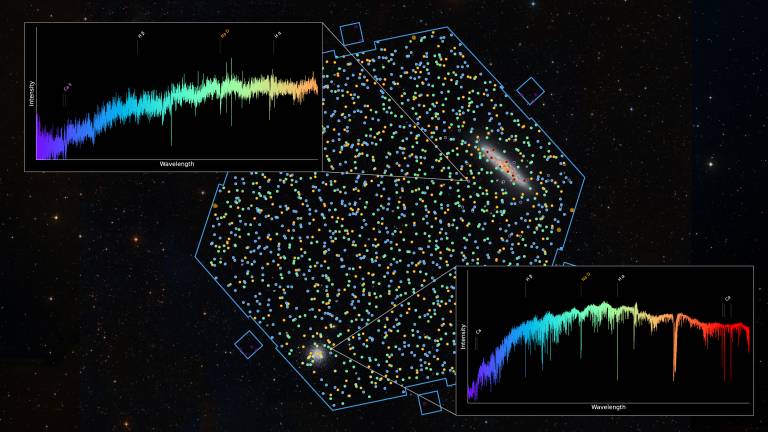
With over 2,400 glass fibers at its core, 4MOST can conduct numerous scientific programs in parallel. One set of fibers might focus on studying rare celestial objects, while another could analyze a broader sample of stars or galaxies, making it a versatile tool for researchers.
The first glowing images released by the European Southern Observatory (ESO) showcase the sky surrounding the Sculptor Galaxy, where each vibrant dot signifies an area of focus for one of the 2,400 fibers. These visualizations not only encapsulate data but also spark inspiration for astronomers across the globe.
As the nights unfold, the excitement surrounding 4MOST continues to grow. Each new revelation will deepen our understanding of the cosmos, reminding us of the beauty and intricacy ever-present in our universe. So, let’s share this remarkable journey of discovery far and wide—who knows what wonders lie ahead!
If you would like to see similar good news stories click here & Share this to brighten someone’s day.